ShincoFab Solutions for Industrial Sheet Metal Projects
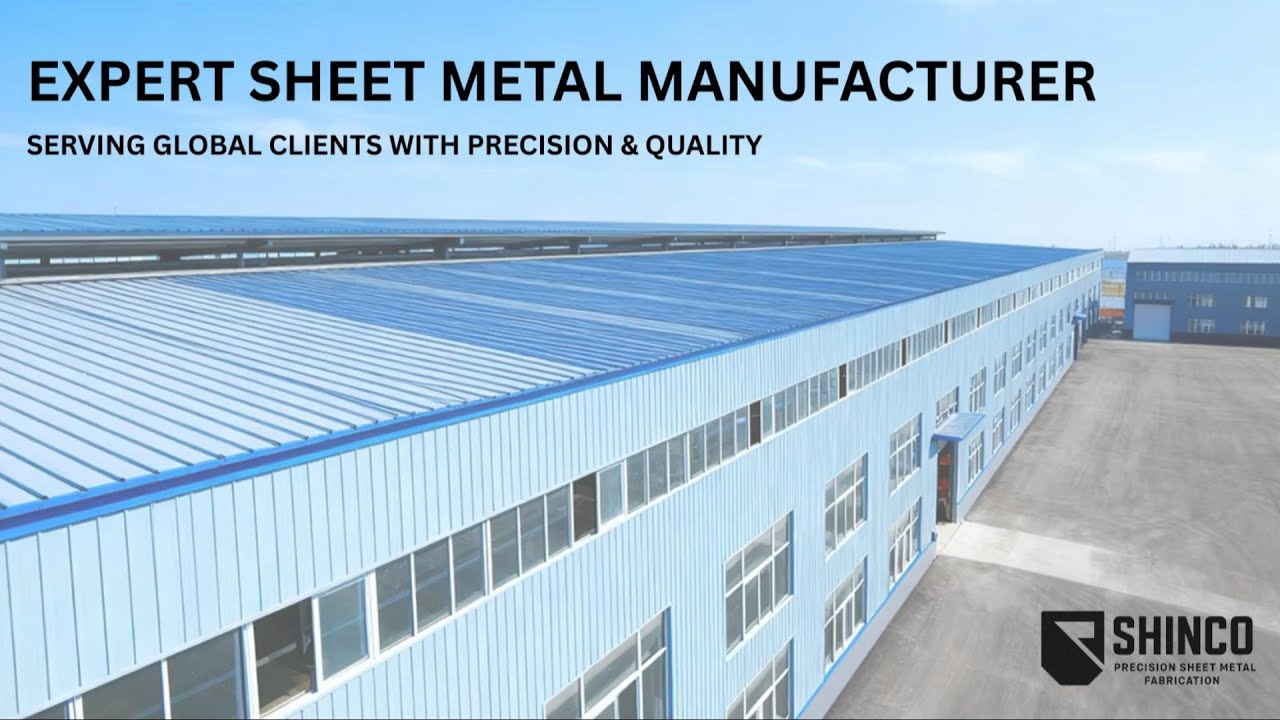
The industrial sheet metal process requires precision, uniformity, and both the handling of paperwork and the material should be handled carefully. Misconduct can cause waste of time and parts or poor finished products, even by small mistakes. The companies dealing with machinery or enclosures, or structural parts, require processes that are consistent all along. Here is where fabrication systems come. ShincoFab is an example of such a manufacturer emphasizing managing such challenges by means of controlled production procedures and useful engineering assistance.
Understanding Industrial Sheet Metal Needs
Small custom jobs are nothing compared to industrial projects. There are high tolerances, repetitive production, and stress-sensitive materials that are commonly involved. Even a fitting part that is improperly fitting, or bends in the wrong way, may influence the assembly as a whole. This is the reason why planning, selection of materials, and process control became critical even prior to production.
Material Selection and Performance
Various metals are needed in various industries. In case the weight concern is a significant factor, then aluminum is taken, and in case of corrosion resistance, stainless steel is taken. Carbon steel is common because it is economical and has strength. The inappropriate material may cause premature wear or failure whilst working, hence it is always better to understand how the material will be used.
Precision Cutting and Shaping
The sheet metal work is based on cutting. Laser cutting is the most common cutter that provides smooth edges and regular forms. A good cut achieves decreased rework in the future. After cutting off parts, they should be bent and shaped with the accuracy of angles to fit well in assembly.
Managing Tolerances
Tight dimensional control is often needed in industrial parts. Any little deviation will cause a problem with alignment. Calibration of machines, experience of operators, and techniques of inspection are all dependent upon tolerances. It is equally important to have batch consistency as it is to be accurate in one part.
Welding and Assembly Challenges
Welding is where several projects fail if it is not done right. Thin sheets might come out of shape or may cause joints to be weak. These risks are minimized by the use of controlled welding. Correct assembly and use of fixtures also allows parts to be overlaid during assembling, particularly when it comes to complicated assemblies.
Surface Finishing Requirements
Surface finishing not only touches the surface. It prevents the corrosion and wear of metal. Whichever process, such as powder coating, anodizing, or plating, is done depends on the surroundings in which the part will be utilized. Poor finishing of products will reduce the longevity of the said structure, despite a sound structure.
Design for Manufacturability
Designing provides minimized production issues. Before fabrication, engineers may review the design to detect problems such as sharp bends, tight corners, or unneeded complexity. Minor changes at this point will be able to reduce cost and work faster without changing functionality.
Production Flow and Lead Time
Projects in industries tend to be time-bound. Slow fabrication can impact whole supply chains. An effective production flow, between checking files and final inspection, can keep the schedules predictable. It also takes less time to quote faster and have smoothly planned workflows before the production line starts.
Adaptability
Another factor worth noting is adaptability during production. Industrial requirements can change due to design updates, material availability, or performance issues found during testing. Fabrication setup should be capable of replying without introducing significant delays and budget hikes. This usually includes changing the settings of the machines, changing the process steps, or re-assessment of materials without altering the end specifications. The stable working process with controlled modifications assists in maintaining the projects on schedule, even though they have to be adjusted to some unforeseen circumstances.
Quality Control and Inspection
Checking is done so that each part will meet the specifications. This involves inspection of size, surface finish, and assembly. Regular inspection practices can be used to maintain consistency during a sizable production cycle, which is a prerequisite in industrial applications.
Role of ShincoFab in Fabrication
ShincoFab provides an array of fabrication processes that include cutting, bending, welding, and finishing. The company aims to keep its production quality unchanged and sustain various project sizes, including prototypes and batch manufacturing. It is typical of the business in a normal industry practice, and it is not based on any unusual aspect, emphasizing more on controlling the processes of engineering and its realistic contributions.
Conclusion
It is not only machines that are useful in industrial sheet metal projects. They rely on planning, the knowledge of materials, regulated processes, and regular inspections. Every single phase of design to finishing influences the result. Such manufacturers as ShincoFab can be included in this process to offer organized fabrication services that can suit these demands. In any industrial setup, it is always better to get it right at the micro level and ensure that everything goes as planned all the way through production.